The Akhal-Teke Horse: Turkmenistan's National Treasure
The Akhal-Teke is one of the oldest horse breeds in the world and the national symbol of Turkmenistan. Here is what makes the breed unusual, where to see them, and why 2026 is a particularly good year to visit.
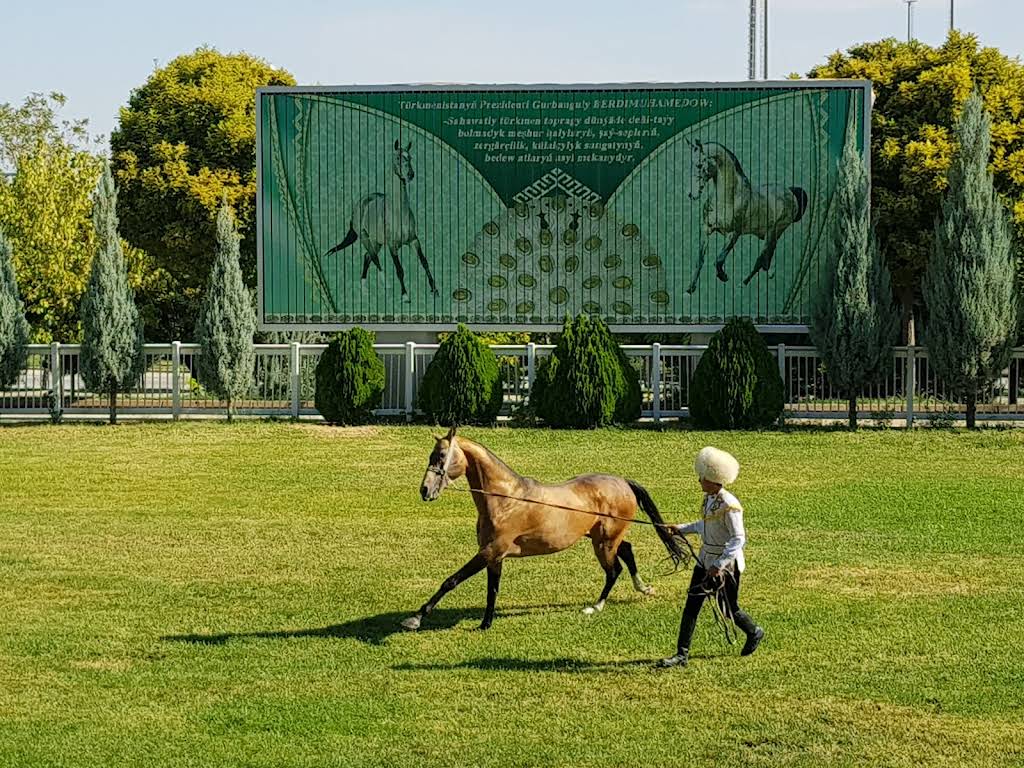
The Akhal-Teke is one of the oldest horse breeds still in existence, bred in the Karakum desert for at least 3,000 years. There are roughly 6,600 of them left in the world. Most live in Turkmenistan, where the breed appears on the national emblem, features on banknotes, and gave its name to the Ahal province. In 2026, Turkmenistan officially designated the year as the 'Homeland of Purposeful Heavenly Horses' - a title that tells you something about how seriously the country takes this animal.
Where the breed comes from
The name breaks down simply: Akhal refers to the oasis along the northern slopes of the Kopet Dag mountains, and Teke is the Turkmen tribal group that bred and guarded the horses there for centuries. The Teke kept strict bloodlines and rarely traded their horses, which is part of why the breed remained so distinct.
The horses were bred for the conditions of Central Asian desert travel: long distances between water sources, extreme heat during the day, cold at night, and terrain that varied from loose sand to rocky mountain passes. Those pressures shaped a lean, long-legged animal with a high tolerance for heat and an unusual ability to travel far on little food and water. Historical accounts describe Akhal-Teke horses completing rides of over 4,000 km, including a 1935 journey from Ashgabat to Moscow covering 4,300 km in 84 days, with 360 km crossing the Karakum desert without water.
What makes the coat metallic
The metallic sheen of the Akhal-Teke coat is not a color, it is a structural property of the hair itself. Most horse breeds have hair with a thick, opaque central core. Akhal-Teke hair has a much thinner core, and in some coat colors almost no opaque core at all. The outer layer of the hair acts like a prism, bending and reflecting light in a way that produces the iridescent, metallic effect you see in photographs.
The result looks different depending on the base color. Bay Akhal-Tekes have a warm copper sheen. Palomino coats appear gold. Black horses develop a blue or silver cast. Grey horses can appear almost white with a silver overlay. The effect is most visible in direct sunlight, which is why photographs taken in flat lighting often fail to capture what the breed actually looks like in person.
The sparse coat and thin skin that produce this effect also serve a practical function: they help the horse regulate body temperature in desert heat.
Build and temperament
Akhal-Tekes stand between 14.3 and 16 hands tall (roughly 1.47 to 1.63 meters at the shoulder) and weigh between 400 and 500 kg. The frame is narrow and long compared to most breeds, with a long neck, a lean head, and large, expressive eyes. The mane and tail are thinner than on most breeds, sometimes nearly absent on the neck.
The temperament is described consistently across sources as intelligent, loyal, and sensitive. Akhal-Tekes tend to bond closely with a single person and can be difficult for inexperienced riders. Turkmen trainers work with the horses from a very young age, and the relationship between horse and handler is considered central to how the breed performs. An Akhal-Teke that trusts its rider is willing and fast. One that does not is another matter entirely.
They compete in dressage, show jumping, and endurance racing. Their endurance credentials are genuine: the breed was built for exactly that kind of work over thousands of years of desert travel.
The Akhal-Teke in Turkmenistan today
The horse appears on Turkmenistan's national emblem, adopted after independence in 1991. It also features on the 1 and 5 manat banknotes. The Ahal Region, which covers much of central Turkmenistan including Ashgabat, takes its name directly from the Akhal oasis where the breed developed.
President Berdimuhamedow has written books about the Akhal-Teke and regularly appears with the horses at public events. This level of official attention has translated into real resources: the country maintains state stud farms, a dedicated equestrian complex outside Ashgabat, and a national registry.
In 2023, UNESCO added the art of breeding Akhal-Teke horses and the culture of their adorning to the Representative List of the Intangible Cultural Heritage of Humanity. The listing recognizes not just the breed but the full set of practices around it: the training methods, the decorative embroidery on horse blankets and bridles, and the social role of the horse in Turkmen life.
2026 has been declared the Year of the Heavenly Horses, with events and festivals planned throughout the year. If you are visiting Turkmenistan in 2026, you are likely to encounter the breed more prominently than in most years.
National Horse Day
Turkmenistan celebrates National Horse Day on the last Sunday of April each year. The main event takes place at the Akhal-Teke Equestrian Complex outside Ashgabat and includes races, displays of horsemanship, and a formal ceremony. Attendance runs into the thousands. If your travel dates are flexible and you have any interest in the breed, this is the best single day to visit.
The festival also includes displays of traditional Turkmen crafts connected to horse culture: the embroidered blankets, bridles, and saddle covers that UNESCO recognized as part of the intangible heritage listing.
Where to see Akhal-Teke horses in Turkmenistan
The Akhal-Teke Equestrian Complex sits about 15 km outside central Ashgabat. It is the main venue for the National Horse Day festival and hosts races at other points during the year. The facility includes a track, stables, and a museum with exhibits on the breed's history.
State stud farms operate in the Ahal Region and can sometimes be visited as part of a tour itinerary. These farms maintain breeding stallions and are where most of the serious training happens. Visits are not independently arranged - access is through a tour operator who has existing relationships with the farm.
In Ashgabat itself, you will see the breed referenced everywhere: in the white marble horse statues that appear throughout the city, in the equestrian monument at the Ruhyyet Palace, and in the large gold-plated horse-and-rider statue that tops the Neutrality Arch. The physical horses are outside the city.
Seeing the horses as part of a tour
Most visitors to Turkmenistan see the Akhal-Teke in passing: at the equestrian complex, on a stud farm visit, or during the National Horse Day festival. A small number of specialist operators run riding tours that put you in the saddle on one of the horses for multiple days.
Many of our Turkmenistan tour packages include visits to the equestrian complex and, for itineraries that pass through the Ahal Region, stud farm stops can often be arranged. If you want to attend National Horse Day specifically, let us know your travel dates and we will build the itinerary around it.
Group tours running in late April typically include the festival as a fixed itinerary point. Check the current schedule to see if a departure falls near your dates.
A few practical notes
Photography at the equestrian complex and during the festival is generally permitted. At stud farms, ask your guide before photographing horses or handlers.
The horses are not used for tourist rides at the equestrian complex itself. Riding access requires a specialist riding tour operator. Day visits to watch training sessions or races do not include riding.
If you are combining Turkmenistan with a trip to Uzbekistan or Kazakhstan, be aware that Akhal-Teke horses are also kept and bred in both countries, though in smaller numbers. The main stud farms and the cultural center of the breed remain in Turkmenistan.
Why the breed nearly disappeared
The Akhal-Teke came close to extinction in the 20th century. Soviet agricultural policy treated horses primarily as a food source, and large numbers of Akhal-Tekes were slaughtered for meat in the 1930s. A small group of Turkmen breeders maintained bloodlines through this period, often at personal risk. By the time Soviet policy shifted in the 1950s, the global population had dropped to a few hundred animals.
Recovery has been slow. The current population of around 6,600 horses worldwide is the result of 70 years of deliberate breeding programs. The gene pool remains narrow, and the breed carries several hereditary health conditions including Naked Foal Syndrome, a fatal recessive condition that produces foals without a functional coat.
That near-extinction is part of why Turkmenistan treats the breed as a national priority rather than just a symbol. The horses survived because specific people chose to protect them. That history is not far in the past.