Turkmenistan Food: What to Eat and What to Expect
A practical guide to Turkmen food: what to order, what to expect, and which dishes are unique to Turkmenistan. Covers dograma, çekdirme, fitçi, somsa, semeni, chal, and where to eat in Ashgabat.
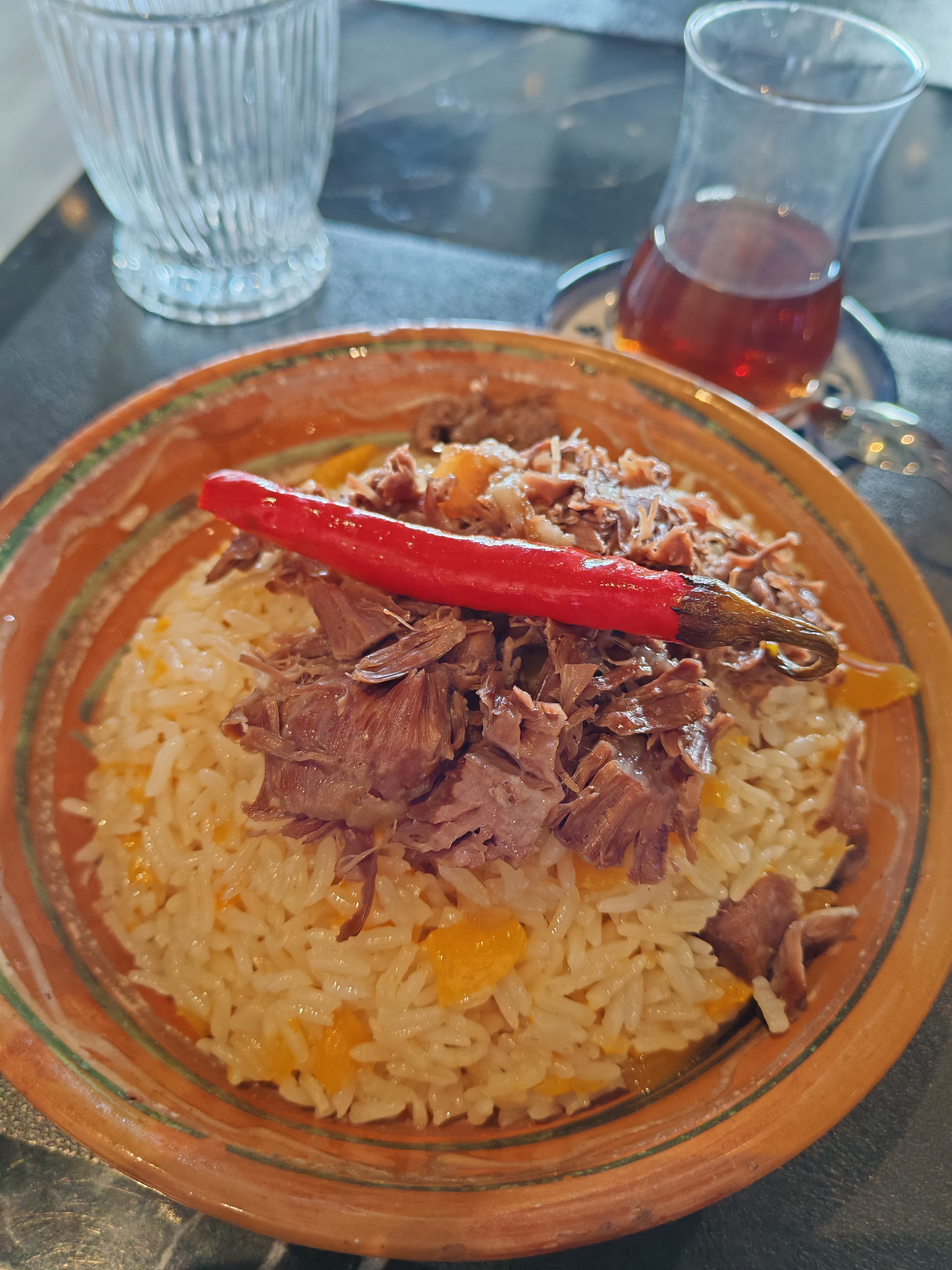
Turkmenistan food sits in its own corner of Central Asian cuisine. The base is familiar: lamb, flatbread, rice, and tea. But several dishes here exist nowhere else, the Caspian Sea introduces fish in a way you won't find in landlocked Uzbekistan or Tajikistan, and the traditional drink is fermented camel milk. This guide covers what is worth ordering, what is worth seeking out, and what to expect on a tour.
What makes Turkmen food different
Three things separate Turkmen cuisine from its Central Asian neighbours.
First, the nomadic heritage is more present in the food than in Uzbekistan. Dishes like ýarma (cracked wheat cooked in sheep fat) and govurma (deep-fried lamb preserved in its own fat) come directly from a seminomadic pastoral tradition. The spicing is minimal: salt, black pepper, and cottonseed oil. The flavour comes from the quality of the meat and the cooking method, not from spice blends.
Second, the Caspian Sea. Turkmenistan has a long western coastline, and fish, particularly Caspian sturgeon and kutum, appears on menus in ways that would be unusual further east. Fish-based plov is a Turkmen specialty.
Third, bread is treated with a seriousness bordering on reverence. The clay oven used to bake it, the tamdyr, is considered a sacred object in traditional Turkmen households. Leaving bread on the ground or sitting on it is disrespectful. It arrives first at every table and stays throughout the meal.
Bread and the tamdyr
The standard Turkmen flatbread is çörek (also written çorek or chorek), baked on the inner walls of a tamdyr oven sunk into the ground. The exterior comes out charred and slightly smoky; the interior is soft. It is torn by hand, never cut.
![[IMAGE: fresh çörek flatbread being pulled from a tamdyr clay oven in Turkmenistan]](https://pb.visitturkmenistan.today/_/../api/files/pbc_3607937828/kf35gldzgpduv6i/tandyr_ydcbi4l9qs.png)
Etli nan is a filled flatbread: ground lamb and onion pressed into the dough before baking. It is common at chaikhanas (teahouses) and as street food. Gutap is a smaller, pan-fried half-moon pastry filled with lamb and onion or with pumpkin (kädili gutap). Both are everyday items you will encounter without trying.
Fitçi is the one worth going out of your way for. These are small baked meat pies with a thin, unleavened dough crust filled with minced lamb or beef, tail fat, and onion. They were recorded as one of the most popular street foods in Turkmenistan in the 1970s. Historical versions were larger with more onion than what you find today. A fresh fitçi from a bakery, eaten hot, is one of the best cheap meals in Ashgabat.
The main dishes
Palow (plov) is rice cooked in a cast-iron kazan with lamb, carrots, and onion. It is the centerpiece dish at weddings, funerals, and any occasion requiring a crowd to be fed. Turkmen palow uses more water than Uzbek plov, producing softer, less separated rice. Balyk palow is the fish variant: Caspian fish replaces the lamb, the flavour is lighter, and it is worth ordering if you see it.
![[IMAGE: large kazan of Turkmen palow cooking over open fire at an outdoor celebration]](https://pb.visitturkmenistan.today/_/../api/files/pbc_3607937828/ohigzyw9l9cml2e/palow_4zgru04agx.png)
Dograma is the most distinctly Turkmen dish and one you will not find anywhere else. Flatbreads are baked in a tamdyr, a whole mutton is boiled until the meat falls from the bones, then the bread is torn into small pieces and layered with shredded meat and thinly sliced raw onion. Broth is poured over the top and absorbed into the bread as you eat. It is traditionally prepared for specific ceremonial occasions, including the first day after a funeral. Some restaurants in Ashgabat serve it. If you are invited to a home where dograma is being made, that is a significant occasion. It is eaten by hand.
![[IMAGE: dograma dish of torn flatbread shredded mutton and onion in a bowl Turkmenistan]](https://pb.visitturkmenistan.today/_/../api/files/pbc_3607937828/qmvsk0qnjp9tm7l/dograma_5to2p4qyxg.png)
Çekdirme is lamb cooked simultaneously with rice, tomato, and onion in a single pot. It is closer to a stew than a plov: the lamb is cut small, the tomato gives it a slightly acidic note, and the result is softer and more sauce-heavy than palow. It appears on restaurant menus across the country and is one of the more reliable orders for visitors who find plov too heavy.
Ýarma is cracked wheat cooked in sheep fat with minced mutton. It is one of the oldest dishes in Turkmen cooking, predating rice agriculture in the region. The texture is thick, almost porridge-like. You will not find it on most restaurant menus; it is home cooking and festival food. If it appears on a host's table, eat it.
Govurma is deep-fried chunks of lamb cooked in a cast-iron kazan in their own rendered fat. The exterior crisps; the interior stays tender. In its preserved form (govurdak), the cooked meat is packed into an animal stomach and stored, functioning as a long-keeping food source from the nomadic tradition. The fresh version is served simply, with çörek and raw onion.
Içlekli and gelin budy
Içlekli are fried meat pastries: a thin dough casing filled with seasoned lamb and deep-fried. They are sold at bazaars and teahouses, eaten hot, and considerably more flavourful than the appearance suggests. The dough fries up thin and slightly blistered. They share DNA with the Russian cheburek but predate the Soviet influence on Turkmen cooking.
Gelin budy, which translates as 'bride's thighs', are meat-stuffed croquettes with a rice and potato crust. The filling is minced beef or lamb with onion, garlic, and parsley. The shell is made by combining boiled rice with mashed potato and flour, shaping it into a ball, hollowing it out, filling it, sealing it, and deep-frying until golden. The rice crust gives a texture you won't find in flour-based croquettes. They appear as an appetiser or snack.
Somsa
Somsa are baked meat pastries found across Central Asia, but the Turkmen version has specific characteristics worth knowing. The dough is unleavened and layered, similar to a rough puff pastry, shaped into a triangle or round, filled with minced lamb and onion (often with added tail fat), and baked directly on the inner wall of a tamdyr. The heat of the tamdyr gives the exterior a dry, slightly blistered surface and a flaky crust that no conventional oven can replicate.
![[IMAGE: freshly baked somsa pastries with layered flaky crust cooling on a tray outside a bakery in Ashgabat]](https://pb.visitturkmenistan.today/_/../api/files/pbc_3607937828/1slkpiop1scyevn/somsa_sku0o8cp1z.png)
Somsa are sold at bakeries, bazaar food stalls, and chaikhanas, and are best eaten immediately out of the tamdyr. The filling should be slightly juicy from rendered fat and onion; a dry filling means the pastry has been sitting too long. In Ashgabat, stalls near the bazaars sell them through the morning until they run out, which is usually before noon. Pumpkin-filled somsa (kädili somsa) appear seasonally and are worth trying if you see them.
The connection to the Indian samosa is real but distant. The dish likely spread along trade routes through Persia and Central Asia before reaching the subcontinent. The Turkmen version is closer to the Central Asian archetype: baked rather than fried, with a drier, flakier crust and a simpler filling.
Desserts
Pişme are sweet fried breads, traditionally given to guests as a welcoming gift. The dough is rolled out, cut into diamond shapes, and fried in cottonseed oil. The result is light, slightly crisp, and dusted with powdered sugar. They are presented at the start of a visit or celebration rather than as a course at the end of a meal.
Semeni is a Nowruz dessert made from sprouted wheat. The preparation takes six days: wheat is rinsed and kept in water with daily changes until the grain sprouts roots and shoots. The sprouted wheat is then blended with water to extract a milky liquid, which is strained and slowly cooked with flour over low heat, stirred continuously, until the mixture darkens and thickens. The result is dense, slightly sweet, and carries a mild malt flavour from the sprouted grain. It appears once a year, at the spring equinox, and is prepared in large quantities for sharing between families.
Pakhlava is the Turkmen version of baklava: layers of thin dough filled with crushed walnuts or pistachios, soaked in sugar syrup, and baked until crisp. It is served at celebrations and sold at bakeries. The Turkmen version tends to be less sweet than Turkish baklava and uses thicker layers of pastry.
Turkmen melons deserve a mention here because they function as dessert in summer. The varieties grown in the Murgab and Amu Darya irrigation zones are bred for sugar content rather than shelf life, which is why they do not travel well and rarely appear abroad. Melon season runs July to September. During that window it appears on tables before and after meals, and sold by the kilogram at every bazaar at low prices. Dried melon strips (gawun gurusy) are available year-round at bazaars and are extremely sweet.
Turkmenistan takes its melons seriously enough to have a national holiday for them. Melon Day is celebrated on the second Sunday of August each year, with displays of melon varieties, music, and dance in Ashgabat. It was established in 1994, making it one of the older national holidays in independent Turkmenistan, alongside Carpet Day and Race Horse Day, which tells you something about the three things the country is proudest of. If your travel dates land in early to mid August, the festival is worth timing your visit around.
![[IMAGE: pişme fried diamond breads, pahklava pastry, and sliced Turkmen melon arranged on a table in Turkmenistan]](https://pb.visitturkmenistan.today/_/../api/files/pbc_3607937828/lwoaq1xpu9wkyd8/desserts_mqn3it8xha.png)
Drinks
Çal is fermented camel's milk, white, slightly sparkling, sour in flavour, and low in alcohol. It is one of the most distinctly Turkmen beverages in Central Asia and has been part of the nomadic diet for centuries. Camels can be milked in conditions and seasons where cows cannot, which gave çal a practical role in desert travel. It is more commonly found in rural areas, at festivals, and in traditional homes than in city restaurants. If it is offered, accepting it is the polite response.
Çaý, green tea, is the universal drink. It is served in small piala bowls without milk, refilled continuously, and marks the beginning and end of every visit. At a traditional Turkmen table, you do not need to ask for more tea; the host will pour it. Refusing tea at the start of a visit is unusual enough to cause awkwardness.
Ayran is cold yogurt thinned with water and salted, similar to Turkish ayran. It is widely available, refreshing in summer heat, and a reasonable accompaniment to grilled meat. Kumiss (fermented mare's milk) is also present in Turkmenistan, as it is across the steppe cultures of Central Asia, but çal is the more distinctly Turkmen version.
Gurt are dried yogurt balls, rolled into small spheres and dried hard. They are eaten as a snack on the road, dissolved into soups, or used as a flavour base. The taste is intensely sour and salty. Nomadic communities carried gurt as a long-lasting food source; it still appears at bazaars sold loose by weight.
Where to eat in Ashgabat
Chaikhanas are the standard eating place: teahouse-style restaurants serving palow, çorba (lamb broth soup), shashlik, bread, and çaý. Prices are low. A full meal with tea runs 30 to 60 TMT per person depending on what you order.
The Altyn Asyr bazaar (also called the Russian Bazaar) has a food section with cooked dishes, fresh çörek from the tamdyr, fitçi, and shashlik stalls. Eating at the bazaar is the fastest way to find local food without arranging anything. The quality varies by stall; look for the ones with the longest queues of local customers.
For a detailed breakdown of Ashgabat, including neighbourhoods, markets, and what to do beyond eating, see our Ashgabat travel guide.
Frequently asked questions
What is the national dish of Turkmenistan?
Dograma is widely considered the most distinctly Turkmen dish: shredded mutton, torn flatbread, raw onion, and broth, eaten by hand at ceremonial occasions. Palow (plov) is the more common everyday celebration dish. Both are found nowhere else in the same form.
Is Turkmenistan food spicy?
No. Turkmen cuisine uses minimal spicing: salt, black pepper, and occasionally cumin. The flavour comes from the quality of the lamb and the cooking method, not from chilli or spice blends. It is milder than Indian or even Uzbek food.
What can vegetarians eat in Turkmenistan?
Options are limited. Bread (çörek), vegetable soups, salads, kädili gutap (pumpkin flatbread), and plain rice are available at most chaikhanas. Fruit is abundant in season. Turkmen cuisine is built around lamb and a strict vegetarian diet requires advance planning with your tour operator.
What is çal?
Çal is fermented camel's milk: white, slightly sparkling, sour, and low in alcohol. It is one of the most distinctly Turkmen beverages and has been part of the nomadic diet for centuries. It is more common in rural areas and at festivals than in Ashgabat restaurants. If a host offers it, accepting is the polite response.
Food on a Turkmenistan tour
Most Turkmenistan tour packages include lunch and dinner as part of the daily itinerary, arranged at local restaurants or chaikhanas. For itineraries that reach Merv, Ancient Nisa, Darvaza, or the Caspian coast, some meals are at guesthouses where the food is home-cooked and likely to be the best you eat on the trip.
Vegetarians will find the options limited. Turkmen cuisine is built around lamb and the menu at most chaikhanas reflects that. Bread, salads, vegetable soups, and rice are available, but it requires planning. Let us know in advance and we will arrange accordingly.
Our fixed-date group tours include all main meals as standard from day one. Food costs are low by any international comparison: even at a mid-range Ashgabat restaurant, a full dinner with multiple dishes runs under $10 per person.