Ashgabat Travel Guide: Marble City, Monuments, and Getting Around
Ashgabat is Turkmenistan's capital, a city of 1.03 million people (2022 census) built almost entirely in white marble. Here is how to get around, what to see, and how to plan a visit.
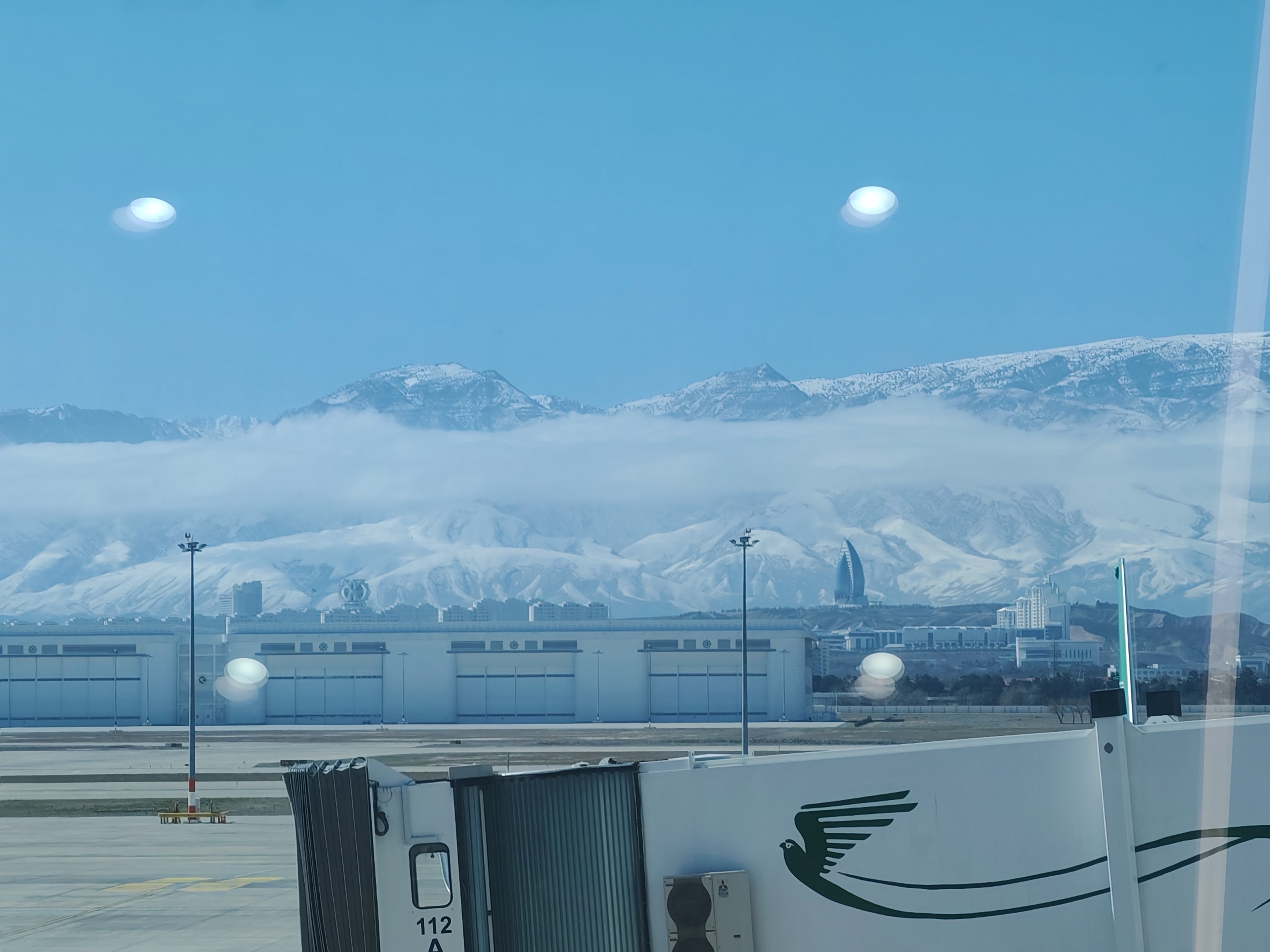
Ashgabat is the capital of Turkmenistan, a city of just over 1.03 million people according to the country's 2022 national census, built almost entirely in white marble and holding more Guinness World Records than any other capital city on earth. It sits in the Karakum Desert at the foot of the Kopet Dag mountains, about 24 km (15 miles) north of the Iran border. Nearly every foreign visitor to Turkmenistan starts here, since Ashgabat is the country's main international gateway, its seat of government, and the base for trips to the Darvaza gas crater, ancient Merv, and Konye-Urgench. This guide covers what the city looks like, how it got that way, and how to plan a visit: getting around, what to see, where to stay and eat, and when to go.
Ashgabat at a glance
Ashgabat's population stood at 1,030,063 in Turkmenistan's 2022 national census, about 14.6 percent of the country's total, according to the State Committee of Statistics. That makes it by far the largest city in Turkmenistan, several times the size of Mary or Turkmenabat, the next-largest urban centers.
The city has been Turkmenistan's capital since independence from the Soviet Union in 1991, and before that it was the administrative center of the Transcaspian region under the Russian Empire. Newer population trackers estimate the wider metro area anywhere from roughly 1.00 million to 1.14 million people for 2026, but these figures disagree substantially with one another since Turkmenistan does not publish frequent, detailed city-level statistics between censuses. The 2022 census remains the most reliable benchmark for planning purposes.
| Fact | Detail |
|---|---|
| Country | Turkmenistan |
| Population (2022 census) | 1,030,063 |
| Capital since | 1991 (independence) |
| Founded | 1881, as a Russian garrison |
| Currency | Manat (TMT) |
| Main airport | Ashgabat International (ASB) |
| Best months to visit | April-May and October |
Finding Ashgabat on the map: geography and layout
Ashgabat sits in an oasis at the edge of the Karakum Desert, bounded on the south by the foothills of the Kopet Dag mountains and on the north by open desert. The city lies about 24 km (15 miles) north of the Iran-Turkmenistan border, closer to Tehran than to most other Central Asian capitals.
On a map of Turkmenistan, Ashgabat sits in the far south of the country, separated from the Caspian coast at Turkmenbashi and the eastern cities of Mary, Turkmenabat, and Dashoguz by hundreds of kilometers of desert. Within the city, the layout is orderly: wide marble-lined boulevards radiate out from a formal monument district in the center, where the National Museum, Independence Park, and government buildings sit close together, with residential districts and bazaars spreading outward from there. It is compact enough that most tourist sites fall within a 20-30 minute drive of any city-center hotel.
Why Ashgabat is called the White City
Ashgabat holds the Guinness World Record for the highest density of white marble-clad buildings anywhere in the world: 543 buildings across a 22 km² zone, clad in more than 4.5 million square meters of white marble, a record achieved on 25 March 2013 according to Guinness World Records. The nickname White City comes directly from that record.
The record includes Bitarap Türkmenistan Avenue, a 12.6 km boulevard lined with 170 white marble buildings, which is a named subset of the same citywide record rather than a separate achievement. The rebuilding began after independence in 1991 and continued through the 2000s and 2010s, replacing Soviet-era apartment blocks with marble-clad towers, and construction is still expanding into the city's outer districts. One visible side effect of the marble aesthetic: all private cars registered in Ashgabat have been required to be white since the early 2000s, a rule still enforced by traffic police today. For the full list of Ashgabat's other Guinness records, including the world's largest architectural star and largest indoor Ferris wheel, see the guide to Ashgabat's marble city and Guinness records.
From desert garrison to marble capital: a short history
Ashgabat began as a Russian military garrison founded on 18 January 1881, next to the Turkmen village of Askhabad, shortly after Russian forces took the region at the Battle of Geok Tepe. It grew from about 2,500 residents that year to nearly 20,000 by 1897, according to historical population records cited by Britannica and Wikipedia.
The single most defining event in the city's history is the earthquake of 6 October 1948, a magnitude 7.3 quake that leveled most of the city within seconds. The death toll is genuinely disputed: Soviet-era sources reported around 10,000 deaths, while later Western and Turkmen estimates run far higher, up to 110,000 or more, and modern retrospectives commonly cite a range of roughly 70,000 to 100,000. The wide disagreement stems directly from Soviet-era censorship, which suppressed reporting on the disaster's true scale for decades.
Under Soviet rule the city was known internationally by the Russified spelling Ashkhabad, and it served as capital of the Turkmen Soviet Socialist Republic. When Turkmenistan became independent in 1991, the government readopted the Turkmen spelling Ashgabat and began the marble reconstruction program that defines the skyline today. In effect, the city has been substantially rebuilt at least twice in under a century: once after the 1948 earthquake, and again after 1991 as a deliberate architectural statement of the new state.
Getting around Ashgabat
Public buses in Ashgabat cost a flat 0.50 manat per ride, and the network covers the whole city, which makes it the cheapest way to get around once you have arrived. Routes and stops are covered by the free Ashgabat bus map, which works offline and is useful for exploring on a free afternoon.
Taxis wait outside hotels and major sites; agree on a price before getting in since there are no meters, and expect to pay in manat. On a guided tour none of this matters day to day, since your driver and guide handle transport between sites and airport transfer is included as standard on private tours. The city itself is compact, so even independent exploring by bus or taxi rarely takes more than 20-30 minutes between major landmarks.
Ashgabat is also the natural starting point for the rest of a Turkmenistan itinerary. Domestic flights, trains, and long-distance buses to Mary, Turkmenabat, Dashoguz, and Turkmenbashi on the Caspian coast all originate here, and most private and group tours use Ashgabat as the first and last stop on a wider loop through the country.
| Option | Cost | Notes |
|---|---|---|
| Public bus | 0.50 manat flat fare | Covered by the free Ashgabat bus map |
| Taxi | Agree price before riding | No meters; cash in manat |
| Private guide and driver | Included in tour price | Standard on private tours and most group tours |
| Walking | Free | Central monument district is walkable in mild weather |
What to see in Ashgabat
Ashgabat's must-see list centers on a small cluster of sights: Independence Park and its monument, the Neutrality Monument, the State Museum, the National Carpet Museum, the Alem Ferris wheel, the Turkmenbashi Ruhy Mosque in Gypjak, and the ruins of ancient Nisa just outside the city. Most visitors need one full day to cover the highlights and two days for a fuller, unhurried visit.
- Independence Park and Monument – the formal starting point for understanding the city's scale and symbolism
- Neutrality Monument – one of the most recognizable landmarks, best visited near sunset
- National Carpet Museum – Turkmen carpets tied to tribal identity and craftsmanship
- Alem Cultural and Entertainment Center – the enclosed Ferris wheel, a lighter contrast to the formal monuments
- Old Nisa – UNESCO-listed Parthian ruins just outside the city, best visited with a guide
- Ashgabat by night – monuments and fountains lit up after dark, often the most memorable part of a visit
Rather than repeat that list in full here, the complete guide to what to see in Ashgabat covers each site in detail, including which order to visit them in and what a one-day versus two-day route looks like in practice.
Where to stay in Ashgabat
Hotels in Ashgabat range from a $15-a-night hostel bed to $240-a-night five-star rooms, spanning one hostel, six three-star properties, one four-star, and three five-star hotels, all clustered close to the city center. Because independent travel is not possible in Turkmenistan, your hotel is arranged as part of your tour itinerary and submitted with your LOI application before you travel.
Star ratings in Turkmenistan follow a local classification system rather than Western European standards, so a three-star hotel here is clean and functional rather than boutique. The Ashgabat hotels guide lists every current property with real prices, what is included, and which hotel offers the best value for most travelers.
| Tier | Price range | Examples |
|---|---|---|
| Hostel | $15/night | Kuwwat Hostel |
| 3-star | $50–$130/night | Ak Altyn, Mizan, Grand Turkmen, and others |
| 4-star | $100–$130/night | Sport Hotel |
| 5-star | $180–$240/night | Archabil, Oguzkent, Yildiz |
Arriving at Ashgabat International Airport
Ashgabat International Airport (ASB), rebuilt in 2016 in the shape of a white falcon, is the main international entry point for almost every foreign visitor to Turkmenistan. It sits about 10 km from the city center, roughly 15-25 minutes by car, and the arrivals process, including passport control, a COVID test, visa collection, and customs, typically takes 60-90 minutes from touchdown to leaving the terminal.
You cannot board a flight to Ashgabat without a confirmed LOI and visa, and airlines check this at check-in. The Ashgabat airport guide walks through the entire arrivals process step by step, including exact fees in USD cash, which airlines fly into ASB, and how to get from the terminal to your hotel.
Where to eat in Ashgabat
A meal at a local Turkmen restaurant or chaikhana in Ashgabat typically costs 30 to 80 manat per person, roughly $1.50 to $4, while a full dinner at a mid-range restaurant usually comes in under $10 per person. The city's dining scene is small but workable: hotel restaurants, Turkmen and Turkish spots, a handful of European and Chinese options, and bazaar food stalls.
Meals are typically arranged as part of your tour rather than something you book yourself, since your guide knows the reliable options and any free-evening choices nearby. The Turkmenistan food guide covers every well known Turkmen dish in detail, along with real images and descriptions.
When to visit: Ashgabat's climate
Ashgabat's summer daytime highs average around 36°C (97°F) in July, with peaks reaching 44-45°C during the worst heat waves, according to multiple climate data sources. Spring (April-May) and October bring far milder daytime temperatures, generally in the low-to-mid 20s Celsius, which is why most tour operators and travelers treat those months as the comfortable window for sightseeing.
Winter is mild by Central Asian standards but January is the coldest month, with average highs closer to 9-10°C and occasional cold snaps. The Karakum Desert legs of a wider Turkmenistan itinerary, such as an overnight near the Darvaza gas crater, are considerably more demanding in July and August heat than in spring or autumn. If your schedule is flexible, booking around April-May or October makes the biggest difference to how comfortable the trip feels day to day.
| Period | Average daytime high | Notes |
|---|---|---|
| January | ~9-10°C | Coldest month, occasional cold snaps |
| April-May | ~22-28°C | Best conditions for sightseeing |
| July | ~36°C, peaks 44-45°C | Hottest month, demanding for desert legs |
| October | ~22-24°C | Best conditions, alongside spring |
Practical basics: money, language, and connectivity
Turkmenistan's currency is the manat (TMT), but nearly every fee tourists pay directly, from visa costs to the airport COVID test, is settled in US dollar cash rather than manat, so clean, undamaged dollar bills issued after 2008 are essential to bring. Card acceptance is limited outside the largest hotels, and ATMs are unreliable, so budgeting cash in advance matters more here than in most capitals.
Turkmen is the official language and Russian is widely understood, especially among older residents and in Ashgabat's hotels and restaurants. English is spoken at the main hotels and by tour guides, but not widely elsewhere, which is one more reason nearly every visitor travels with a guide. Internet access exists but is heavily restricted and slow by international standards, so it is not something to rely on for navigation or staying in touch home.
Visiting Ashgabat today: tourism, e-visa reform, and the LOI
Turkmenistan has not published detailed international tourist arrival figures to the World Bank's tourism database since the late 1990s, and the country's own statistics have at times cited a low-tens-of-thousands figure for annual foreign visitors in more recent years, though comprehensive current data is scarce. That data gap makes Ashgabat, and Turkmenistan overall, one of the least-documented tourist destinations of any capital city in the world.
In April 2025, Turkmenistan's parliament passed a law intended to eventually replace the Letter of Invitation system with an electronic visa, according to reporting on the legislation. As of mid-2026, however, the e-visa platform is not yet operational and the LOI remains mandatory for every foreign tourist. Plan around the current system: a licensed operator applies for your LOI and visa before you travel, a process the visa support page covers in full.
The contrast with the rest of the region is sharp. Neighboring Uzbekistan's international arrivals have risen well above pre-pandemic levels in recent years, driven partly by visa-free access for dozens of nationalities, while Turkmenistan has kept its guided-tour, LOI-gated model in place. For most visitors this means fewer crowds at major sites in Ashgabat, but also fewer flight options and a booking process that takes real planning rather than a same-week visa run.
Frequently asked questions
Is Ashgabat safe to visit?
Yes. Ashgabat is part of a Level 1 U.S. State Department advisory country, the lowest risk category, and tourist-targeted crime is not a meaningful concern. All foreign visitors travel with a licensed guide throughout their trip, which removes most of the logistics and unfamiliarity that cause problems in other destinations.
How many days do you need in Ashgabat?
One full day covers the main monuments and museums at a reasonable pace. Two days allows time for the National Carpet Museum, Tolkuchka Bazaar, ancient Nisa, and an evening drive to see the city's fountains and buildings lit up after dark, which many visitors find is when Ashgabat feels most memorable.
Is Ashgabat expensive to visit?
No. Local meals cost $1.50 to $4 per person, bus rides cost a flat 0.50 manat, and even three-star hotels run $50-$85 a night. The main costs are the tour package itself, the LOI and visa fees, and international flights, all of which are arranged before you arrive.
Can I visit Ashgabat without a tour?
No. Independent tourism is not available in Turkmenistan. Every foreign visitor needs a Letter of Invitation from a licensed operator and a visa tied to a specific itinerary, so hotels, transport, and sightseeing in Ashgabat are arranged as part of a private or group tour rather than booked separately.
What is the best time of year to visit Ashgabat?
April, May, and October offer the mildest daytime temperatures, in the low-to-mid 20s Celsius, and are the most comfortable months for walking the marble boulevards and visiting outdoor monuments. July and August regularly exceed 36°C and are considerably harder going, especially on desert excursions outside the city.
Plan your visit to Ashgabat
Ashgabat works as the start and end point of nearly every Turkmenistan itinerary, and every visit runs through the same LOI and visa process regardless of how you book. Browse our private tour packages for a custom route built around Ashgabat and the rest of the country, or check fixed-date group tours if you would rather join a scheduled departure. Either way, start your LOI and visa process as early as possible, since it gates everything else about the trip.