What to see in Ashgabat
A practical guide to Ashgabat’s best sights, from marble monuments and museums to Nisa, Gypjak Mosque, local markets, and evening viewpoints.
Ashgabat is one of Central Asia’s most unusual capitals: wide marble avenues, golden domes, huge monuments, quiet parks, and a city layout that feels unlike anywhere else in the region. For most visitors, Ashgabat is also the first introduction to Turkmenistan, so it is worth giving the city enough time instead of treating it only as an arrival point.
Here are the places we recommend seeing in and around Ashgabat.
1. Independence Park and the Independence Monument
Start with Independence Park, one of the best places to understand the scale and style of modern Ashgabat. The area is spacious, formal, and full of symbolic architecture. The Independence Monument is one of the city’s major landmarks, surrounded by fountains, gardens, and ceremonial spaces.
This is a good first stop because it introduces the visual language of the city: white marble, symmetry, national symbols, and large public spaces.
2. Neutrality Monument
The Neutrality Monument is another essential Ashgabat landmark. It was built to commemorate Turkmenistan’s official policy of neutrality and remains one of the most recognizable structures in the city.
If your schedule allows, visit in the late afternoon or evening when the light is softer. Ashgabat’s monuments often look best near sunset, especially when the city lights begin to turn on.
3. The State Museum of Turkmenistan
The State Museum is one of the most useful stops for travelers who want context before visiting the rest of the country. Its collections help explain Turkmenistan’s ancient history, archaeology, traditional culture, and national identity.
It is especially helpful before or after visiting Nisa, Merv, Kunya-Urgench, or other historical sites. Seeing museum objects first makes the ruins easier to understand later.
4. National Carpet Museum
Turkmen carpets are not just decorative objects. They are connected to tribal identity, family history, craftsmanship, and national symbolism. The National Carpet Museum is therefore one of the most culturally important stops in Ashgabat.
Even if you do not usually visit textile museums, this one is worth including. The scale, colors, patterns, and technical detail of Turkmen carpets are easier to appreciate when you see them in person.
5. Alem Cultural and Entertainment Center
Alem is one of Ashgabat’s more playful landmarks, known for its enclosed Ferris wheel. It is a good contrast to the city’s formal monuments and government architecture.
The surrounding area is also pleasant for a short walk, especially in the evening. If you are traveling with children or want a lighter stop between museums and monuments, Alem is a good choice.
6. Turkmenbashi Ruhy Mosque in Gypjak
Located just outside central Ashgabat, the Turkmenbashi Ruhy Mosque is one of the largest and most striking religious buildings in Turkmenistan. Its white exterior, large dome, and tall minarets make it one of the most memorable architectural stops near the capital.
Visitors should dress modestly and behave respectfully. Your guide can advise on when entry is possible and what rules apply during your visit.
7. Tolkuchka Bazaar
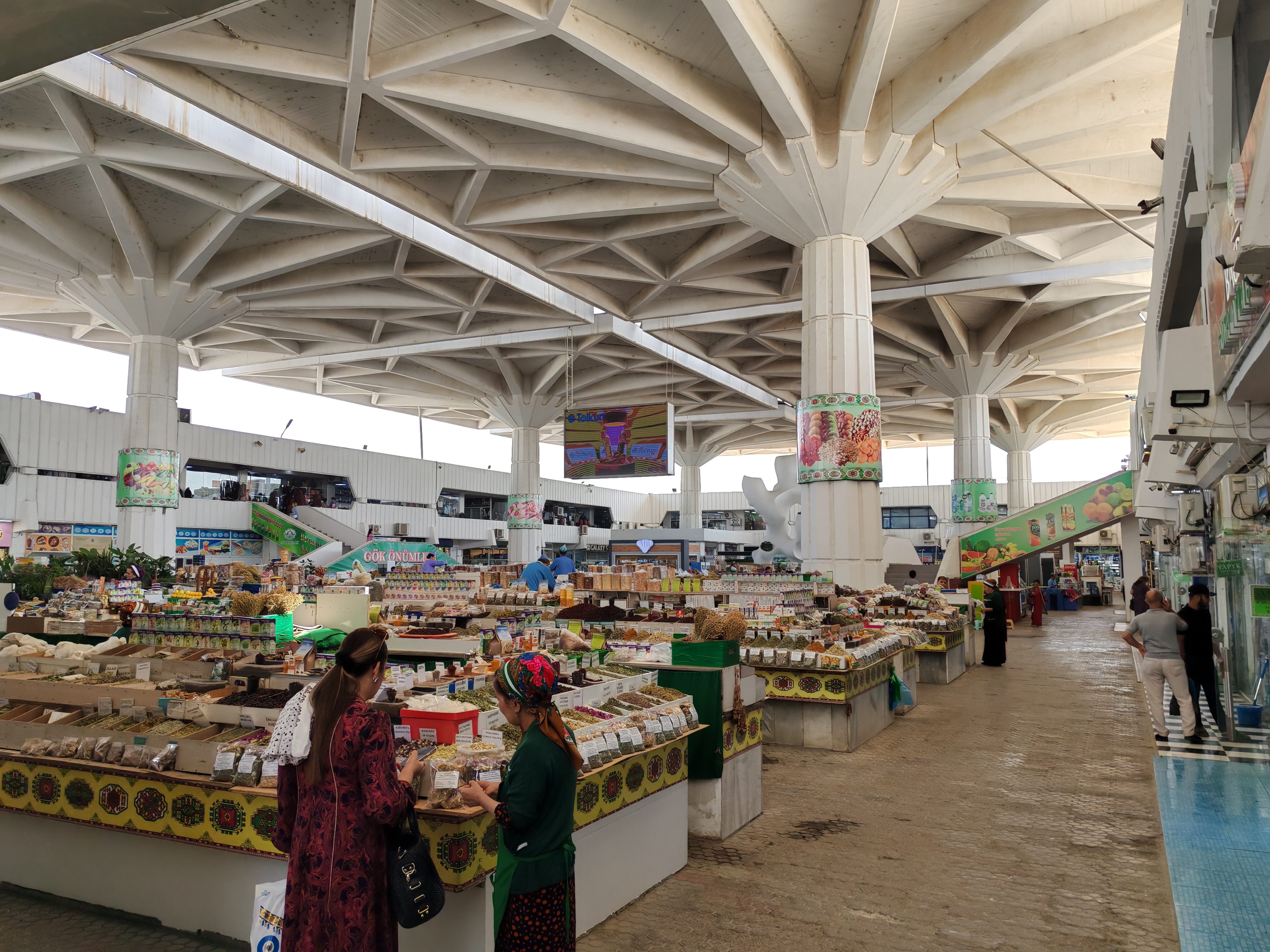
For a more everyday side of Ashgabat, visit Tolkuchka Bazaar. It is the place to look for local produce, textiles, household goods, souvenirs, and carpets. Markets are also useful for understanding daily life beyond the city’s monumental center.
If you plan to buy carpets or older objects, ask your guide about export rules before purchasing. Some items may need documentation before they can be taken out of the country.
8. Old Nisa
Old Nisa is one of the best historical excursions from Ashgabat. The UNESCO-listed Parthian Fortresses of Nisa were once connected to one of the most important powers of the ancient world. The site is mostly ruins today, but its historical importance is enormous.
Nisa is best visited with a guide because the remains are not always self-explanatory. With context, the site becomes much more interesting: this was a crossroads between Central Asia, Iran, and the wider ancient world.
9. Ashgabat by night
Do not skip an evening drive or walk through Ashgabat. The city changes after dark, when monuments, fountains, hotels, and public buildings are lit up. For many travelers, this is when Ashgabat feels most surreal and memorable.
A short evening route can include the main avenues, major monuments, Alem, and viewpoints where you can see the illuminated skyline.
How much time do you need in Ashgabat?
One full day is enough to see the main highlights quickly. Two days is better if you want museums, markets, Nisa, and a more relaxed evening route. If Ashgabat is part of a wider Turkmenistan tour, it works well as the starting point before continuing to Darvaza, Merv, Mary, or the Caspian coast.
Practical tips
- Bring your passport or a copy, as checks can happen at some sites.
- Ask before taking photos, especially near official buildings, security areas, and some museums.
- Dress modestly for mosques and religious sites.
- Summer can be very hot, so plan outdoor stops for morning or late afternoon.
- A guide and driver make Ashgabat much easier, since sights are spread across the city.
Ashgabat is not a city to rush through. Its appeal is in the contrast: ancient Parthian history near futuristic marble avenues, quiet museums beside huge monuments, and traditional carpets in a capital built on grand modern symbolism. Give it time, and it becomes one of the most memorable parts of a Turkmenistan trip.